


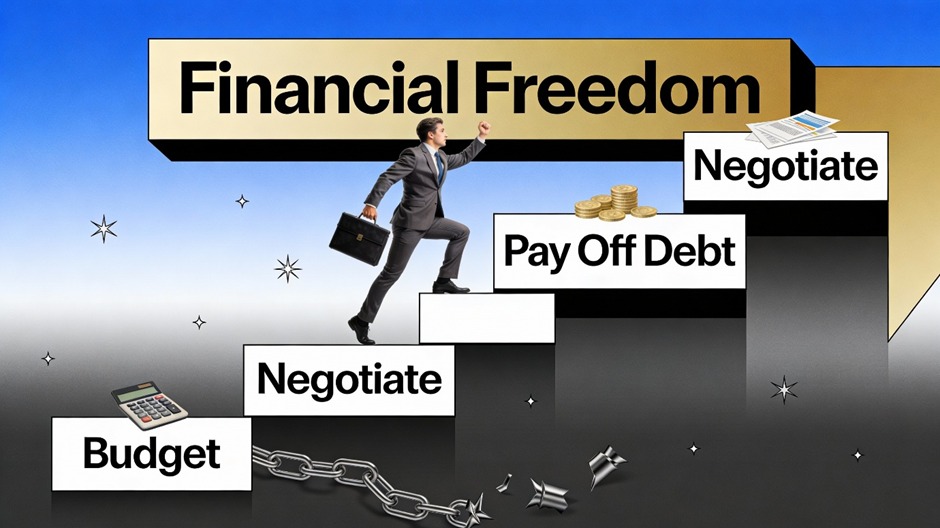
Effective strategies to settle your loans and regain financial freedom revolve around two core ideas: taking control of your money and dealing with lenders proactively and realistically. A structured approach can help you move from constant stress to a clear, manageable plan to become debt-free.
1. Assess Your Complete Debt Picture
Before choosing any strategy, list every loan and obligation you have.
- Include outstanding amount, interest rate, tenure, lender name, and current EMI for each loan or credit card.
- Sort debts by interest rate and urgency (for example, loans already in default or close to default come first).
This clarity shows you which debts are hurting you the most and where negotiation or accelerated payment will have the biggest impact.
2. Build a Realistic Repayment Budget
You cannot settle or clear loans without a budget that actually works in real life.
- Track all income sources and essential expenses (housing, food, utilities, transport, basic healthcare).
- Decide a fixed, realistic monthly amount you can commit towards debt—without relying on new borrowing or credit card swipes.
A stable surplus for debt payments or settlements is more powerful than an aggressive yet unsustainable plan that collapses after a few months.
3. Prioritize High-Interest and Problem Loans
Not all loans need the same strategy or urgency.
- Focus first on high-interest debts like credit cards, personal loans, and consumer loans, as these grow the fastest.
- If any accounts are already in default or written as non-performing by the lender, those are often candidates for settlement rather than full repayment.
This targeted approach reduces total interest paid and prevents problem accounts from spiraling further out of control.
4. Consider Debt Snowball or Avalanche Methods
Two classic repayment structures can help you stay disciplined and motivated.
- Avalanche method: Pay extra towards the highest-interest loan while paying minimums on others; when one is closed, redirect that EMI to the next highest-interest debt.
- Snowball method: Pay off the smallest-balance loan first to gain quick wins and psychological momentum, then roll that payment into the next loan.
Choose the approach that you are most likely to stick with consistently over many months.
5. Negotiate with Lenders for Better Terms
A direct, honest conversation with lenders often opens doors you might not expect.
- Request lower interest rates, longer tenures, or temporary moratoriums during genuine hardship to reduce EMI pressure.
- If your account is already overdue, discuss structured settlement options where the lender agrees to accept a reduced lump-sum or staged payment in full and final settlement.
Be prepared with documents like bank statements, income proof, and a written proposal; lenders respond better when they see seriousness and a concrete plan.
6. Use Loan Restructuring or Consolidation Wisely
If juggling multiple EMIs is overwhelming, restructuring or consolidation may help.
- Loan restructuring can involve extending tenure, changing repayment schedules, or converting unpaid interest into a separate loan, which lowers immediate EMI burden.
- Debt consolidation means taking a new loan—ideally at a lower rate—to pay off multiple high-cost debts, leaving you with one manageable EMI.
These options only help if the new terms are clearly better and you avoid taking on fresh discretionary debt until existing obligations are under control.
7. Prepare for Settlements with a Savings Strategy
Loan settlement usually requires lump-sum or short-period payments that you must plan for.
- Create a dedicated “settlement fund” and automate transfers to it every month.
- Cut discretionary expenses (eating out, subscriptions, impulse shopping, frequent vacations) and redirect that money into this fund until you reach your target amount.
Having cash ready puts you in a stronger position to negotiate better settlement percentages and timelines with lenders.
8. Understand the Impact on Your Credit Score
Settling a loan is not the same as closing it cleanly, and that matters for your future borrowing.
- A “settled” remark can hurt your credit profile, limit access to future loans, or increase the interest rates lenders charge you.
- However, for many people already in deep default, a structured settlement is still better than leaving accounts unpaid and continuously compounding.
After settlement or closure, monitor your credit report regularly and start rebuilding your profile with disciplined use of small, manageable credit lines.
9. Protect Yourself from Harassment and Fraud
When under pressure, many borrowers fall prey to unethical agents or fake “loan fixers.”
- Communicate with lenders and authorized representatives in writing as much as possible, and keep records of all calls, emails, and agreements.
- Never share OTPs, full card details, or sensitive login information with anyone claiming to “settle” your loans instantly.
If you face harassment from recovery agents, learn the collection and conduct rules in your country and, if needed, seek legal or regulatory help.
10. Build Long-Term Financial Habits After Settlement
Regaining financial freedom is not just about closing loans; it is about staying out of future debt traps.
- Maintain an emergency fund of at least 3–6 months of essential expenses to avoid using credit for every unexpected cost.
- Set clear saving and investing goals (retirement, home, education) so that credit is used strategically, not emotionally or impulsively.
Over time, these habits create a cushion between you and future financial shocks, making it far less likely that you will need settlements again.
By combining honest assessment, structured budgeting, focused repayment, and proactive negotiation with lenders, it is possible to settle your loans and gradually rebuild your financial life. The journey demands discipline and patience, but each closed or settled account is a concrete step toward genuine financial freedom.
For more information visit here : http://www.settleloan360.com/