


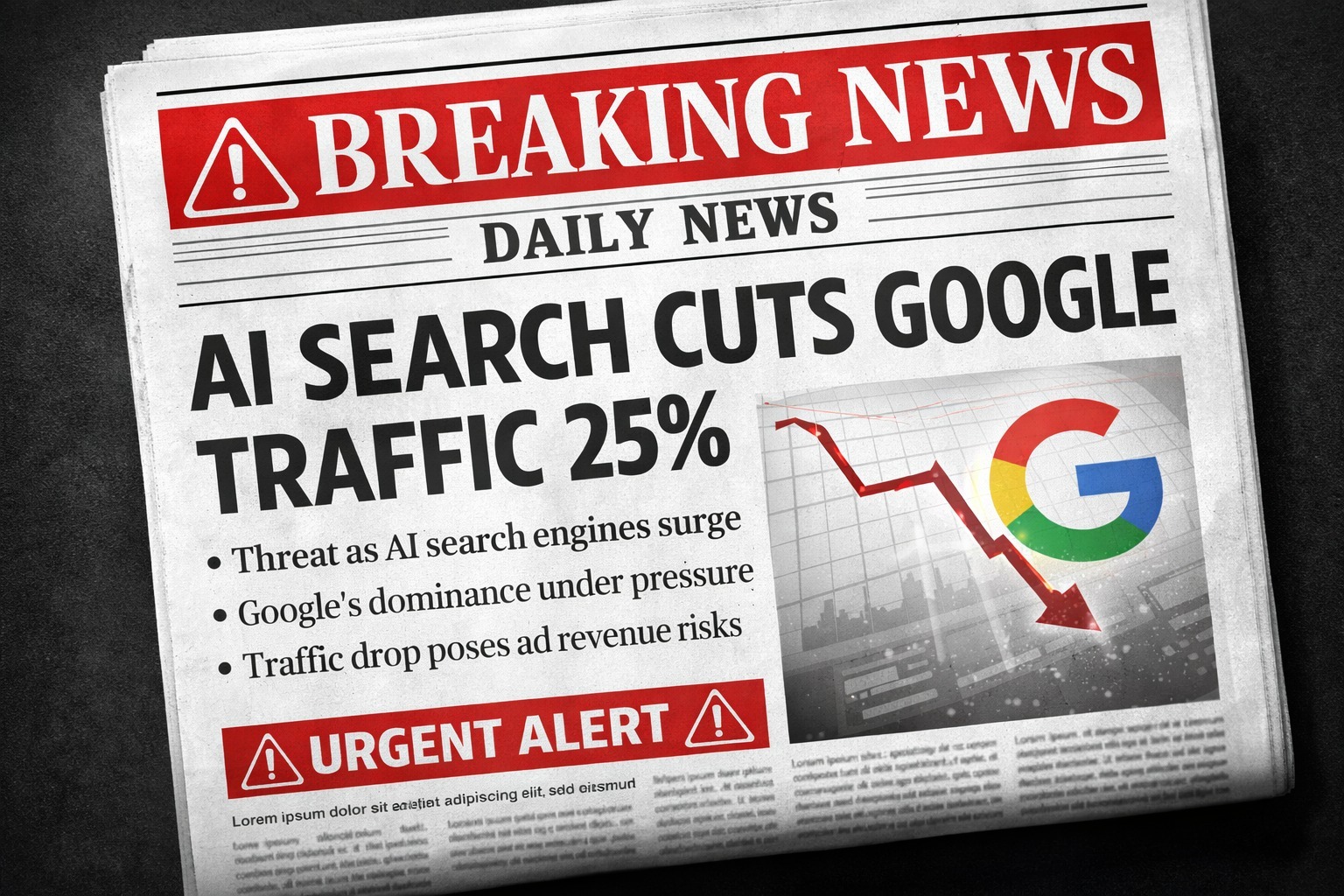
In the boardroom, the conversation around Artificial Intelligence has shifted from “How can we use it internally?” to “How is it changing our customer’s journey?”. As search engines evolve into Answer Engines, the traditional metrics of organic traffic are becoming obsolete. For the modern CEO, the focus must now pivot toward Generative Engine Optimization (GEO)—a strategic framework for ensuring your brand is the preferred source of information for AI models like Gemini, ChatGPT, and Perplexity.
Forward-thinking CEOs are using NSDM AI to stay ahead of AI search trends and safeguard their brand’s digital authority.
The Strategic Shift: From Clicks to Citations
For two decades, Digital Marketing ROI was largely measured by “clicks”. However, as AI summarizes the web, the “zero-click” reality means a user may get all the information they need about your industry without ever visiting your site.
- The New ROI: Success in 2026 is measured by Citation Share. If an AI agent recommends a competitor’s product because their data was more “summarizable,” you have lost the customer at the moment of intent.
- Competitive Advantage: Early adopters of GEO are seeing higher conversion rates because the traffic they do receive is pre-qualified by the AI’s recommendation.
Why GEO is a CEO-Level Decision
GEO is not just an update for the IT department; it is a fundamental shift in how a company manages its intellectual property and brand narrative.
1. Protecting Brand Equity in the Age of LLMs
Large Language Models (LLMs) synthesize information from across the web. If your brand’s “Entity” is inconsistently described or lacks authoritative citations, AI may hallucinate or misrepresent your services. Strategic leadership must ensure that the company’s “Digital Truth” is consistent across all platforms.
2. Information Gain as a Moat
In an era where AI can generate generic content in seconds, the only “moat” left for a brand is Information Gain. This means publishing original research, proprietary data, and executive thought leadership that AI cannot replicate.
3. Future-Proofing Market Share
Gartner predicts a 25% drop in traditional search volume by 2026. CEOs who fail to authorize the pivot to AEO (Answer Engine Optimization) and GEO risk a silent erosion of their market share as customers migrate to conversational interfaces.
The CEO’s Action Plan for AI Search
To maintain a competitive edge, leadership should oversee three primary initiatives:
- Audit for AI Readiness: Use specialized tools to determine how often your brand is currently cited by generative engines.
- Modularize Knowledge: Direct marketing teams to move away from “dense blogs” toward modular, “machine-ready” content that AI can easily extract.
- Leverage Authority: Focus on high-DA (Domain Authority) publications and “Trust Hubs” to validate your brand’s expertise in the eyes of AI crawlers.
Conclusion: The New Era of Authority
The transition to AI search represents a “Great Re-ranking” of the internet. For the entrepreneur, this is a rare window of opportunity to leapfrog established competitors by becoming the most “citeable” authority in the niche. In 2026, the question isn’t whether you rank #1 on Google—it’s whether you are the answer the AI gives.