


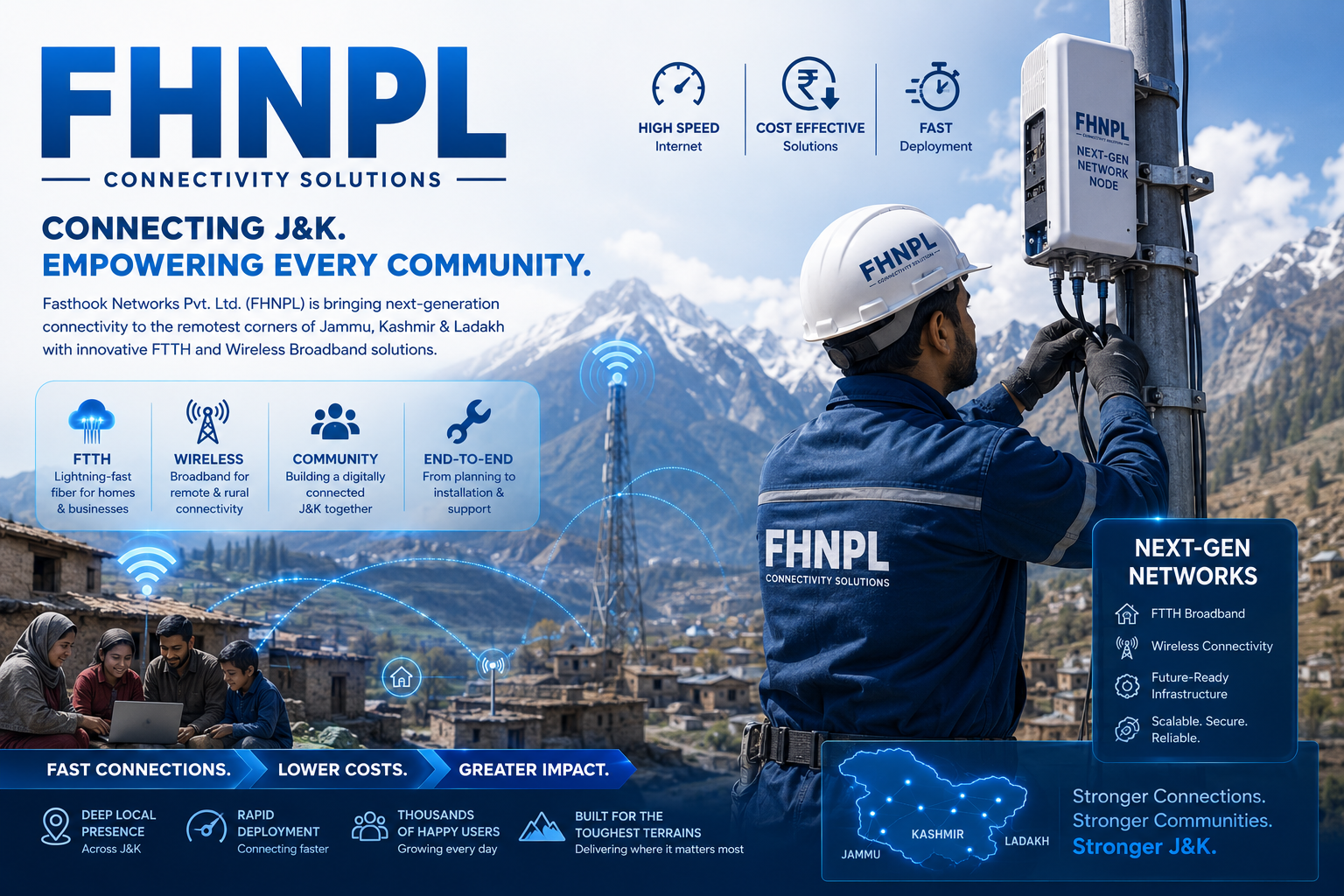
Ladakh’s high-altitude desert and Kashmir’s forested mountain valleys present two very different rural connectivity challenges, yet both regions share the same underlying problem: extreme terrain and low population density make traditional infrastructure economics difficult, leaving rural residents disproportionately underserved compared to urban centres just a few hours away.
Ladakh’s Unique Connectivity Challenges
Ladakh’s high altitude, extreme cold, and vast distances between settlements make infrastructure deployment and maintenance genuinely difficult — equipment must withstand harsh winters, and technicians often face long travel times between remote sites. These conditions demand ruggedised infrastructure and realistic maintenance planning that differ meaningfully from lower-altitude deployments.
Kashmir’s Rural Divide: Proximity Without Access
Villages Just Off the Main Road
Unlike Ladakh’s vast distances, many underserved villages in rural Kashmir sit surprisingly close to well-connected towns — sometimes just a few kilometres off a highway with good coverage. The gap here is less about raw distance and more about the economics of extending infrastructure that final short stretch to lower-density areas.
Seasonal Access Complications
Kashmir’s rural areas also face seasonal complications — heavy snowfall can isolate villages for weeks, both physically and in terms of maintaining existing infrastructure, requiring providers to plan maintenance windows and stock replacement equipment before winter access becomes difficult.
Technology Approaches Suited to Each Region
Wireless broadband backed by dark fibre at strategic points of presence has proven to be the most practical approach for both regions’ rural areas, since it avoids the extreme cost of trenching fibre across Ladakh’s vast distances or Kashmir’s difficult terrain, while still delivering dependable connectivity to dispersed communities. A Rural Internet strategy built around this hybrid model has extended coverage across more than 20 districts spanning both regions.
Why Rural Connectivity Investment Requires Patience
Extending coverage into Ladakh and rural Kashmir rarely delivers the fast return on investment that denser urban markets do, which is precisely why progress depends on operators with a specific, sustained regional commitment rather than short-term profit optimisation. This is reflected in how regional operators frame their own mission — explicitly prioritising “the unserved” as core business, not an occasional charitable gesture.
What’s Changing for the Better
Continued investment in dark fibre points of presence, growing wireless tower density, and supportive rural connectivity policy are gradually narrowing the divide, even if progress in the most remote parts of Ladakh remains slower than in Kashmir’s more accessible rural villages. Residents and institutions in still-unserved areas can accelerate this by directly requesting coverage assessments from operators actively expanding nearby, such as Fasthook Networks Pvt Ltd, which has continued extending its footprint across both regions.
Why Both Regions Deserve Continued Attention
It can be tempting for infrastructure investment to concentrate wherever progress is easiest, but Ladakh and rural Kashmir each represent meaningfully different populations with distinct needs — Ladakh’s dispersed high-altitude communities and Kashmir’s forested valley villages both deserve sustained investment from a Local ISP in Jammu & Kashmir rather than a one-size-fits-all rural strategy that favours whichever terrain is easiest to serve.
Conclusion
Bridging the rural connectivity divide in Ladakh and Kashmir isn’t a single project with a finish line — it’s an ongoing process shaped by terrain, weather and sustained infrastructure investment. The regions that see the fastest progress tend to be those served by operators willing to treat rural coverage as core mission rather than a secondary market.
Frequently Asked Questions
Q: Why is Ladakh harder to connect than Kashmir’s rural areas?
A: Ladakh’s extreme altitude, harsh winters and vast distances between settlements make infrastructure deployment and maintenance more difficult than in Kashmir’s comparatively more accessible rural valleys.
Q: Are rural villages near highways in Kashmir automatically connected?
A: Not necessarily — proximity to a highway doesn’t guarantee coverage, since extending infrastructure that final stretch still requires a specific economic and operational decision by a provider.
Q: What technology works best for rural coverage in both regions?
A: Wireless broadband backed by dark fibre at strategic points of presence has proven most practical for extending coverage across dispersed, difficult terrain in both Ladakh and Kashmir.
Q: Does winter weather disrupt rural internet service?
A: It can, particularly for physical maintenance access, which is why providers plan maintenance windows and equipment stock ahead of the winter season.
Q: Can a rural community request a connectivity assessment?
A: Yes, residents or local institutions can request a site survey from regional operators actively expanding coverage nearby.
Call to Action
Live in a rural part of Ladakh or Kashmir with limited connectivity? Request a free coverage assessment for your area. Visit fhnpl.com or follow updates on Facebook, X (Twitter) and Instagram.
Learn more: fhnpl.com | Facebook | X (Twitter) | Instagram