


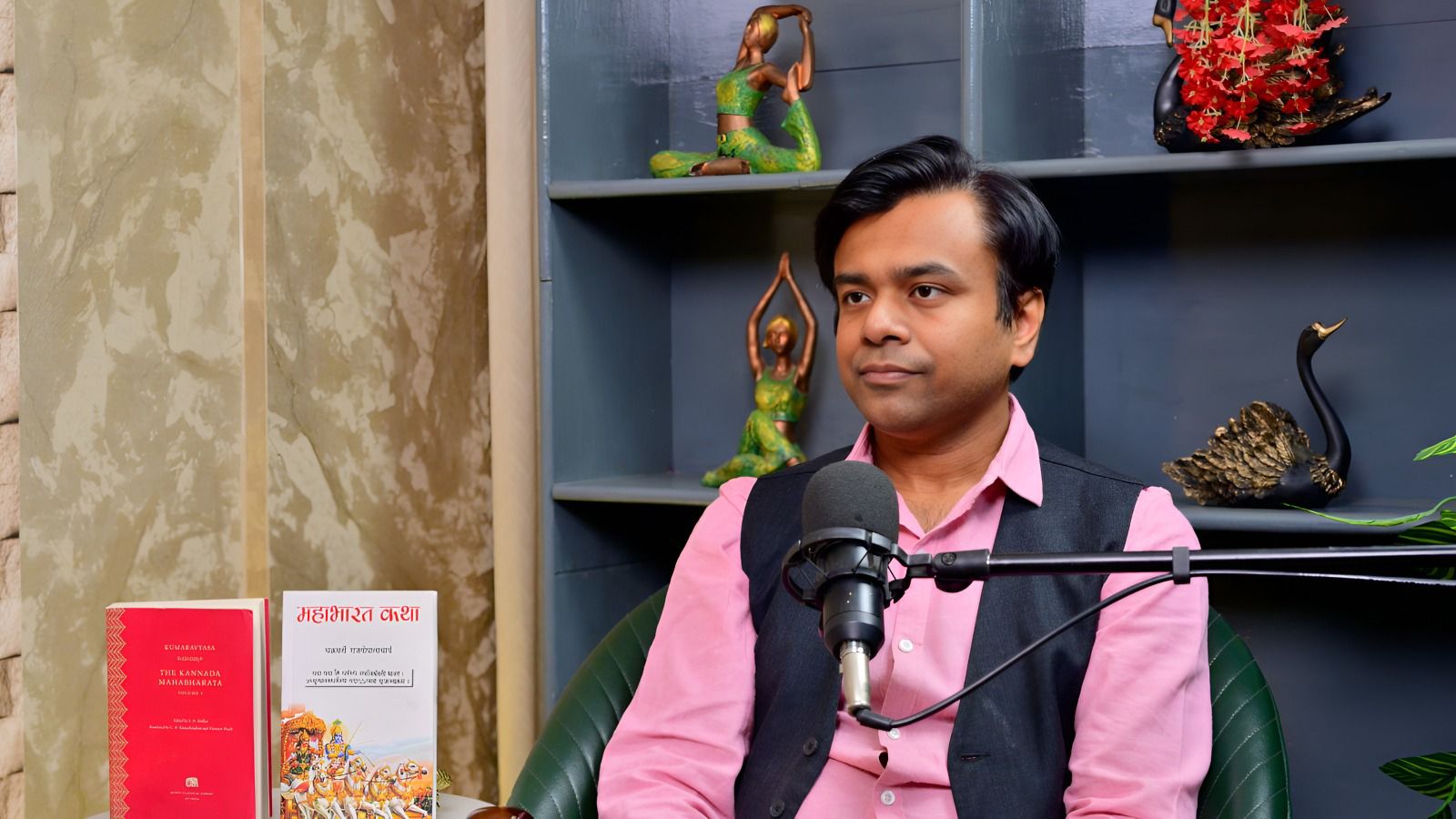
At a time when the Mahabharata is widely consumed through dramatized television narratives and simplified retellings, Varun Gupta, founder of GrahRahasya Decoded, is emerging as a distinct voice advocating for text-based, source-critical engagement with the epic tradition.
Through a calibrated integration of scholarly research and podcast-led public discourse, Gupta represents a growing intellectual movement that seeks to reposition the Mahabharata not merely as mythology, but as a layered textual corpus requiring critical analysis.
Academic Recognition: Entry into Formal Scholarly Discourse
In a significant milestone, Varun Gupta’s research paper—
“Literary Construction, Heroic Inflation, and the Question of Historicity in the Virāṭa Episode of the Mahābhārata”—has been accepted for publication in a reputed peer-reviewed journal.
The study advances a structured argument around:
- Narrative stratification within epic composition
- Heroic amplification of central figures across textual layers
- Structural inconsistencies across manuscript traditions
- The literary shaping of episodes such as the Ghoṣa-yātrā and the Virāṭa war
Grounded in the BORI Critical Edition, and supported by comparative reference to K.M. Ganguli and Gita Press traditions, the research contributes to ongoing academic discussions on historicity, redaction, and compositional evolution of the Mahabharata.
This development marks a clear transition—from digital interpretation to academically validated scholarship.
Podcast as an Intellectual Medium: Beyond Entertainment
A defining feature of Gupta’s work is his use of the podcast format as a serious knowledge system, rather than a purely conversational medium.
Through his Field Podcast series, recorded at historically associated locations such as Karna Tila (Kurukshetra) and Abhimanyu Pur, he introduces a spatial-textual dimension—where geography, narrative, and textual interpretation intersect.
These discussions are characterized by:
- A text-first approach, privileging primary sources over opinion
- Direct engagement with Sanskrit verses and critical editions
- Comparative analysis between popular narratives and textual evidence
- A format that encourages structured thinking rather than passive listening
In this framework, the Mahabharata podcast evolves beyond infotainment into a public-facing extension of intellectual inquiry.

Reframing the Epic: “Truth Beyond TV” as Method
Gupta’s central intellectual position—often articulated as “Truth Beyond TV”—functions not merely as a slogan, but as a methodological stance.
His work revisits widely circulated narratives, including:
- The Abhimanyu episode, examining divergent traditions and narrative framing
- The Ekalavya episode, in the context of hierarchy, omission, and textual variation
- The Karna–Arjuna conflict, beyond simplified moral binaries
- The Virāṭa war, interpreted through the lens of literary compression and heroic intensification
By foregrounding textual evidence over inherited assumptions, this approach contributes to a broader shift toward critical engagement with epic traditions in the digital age.
GrahRahasya Decoded: YouTube as a Space for Public Scholarship
At the core of this work lies GrahRahasya Decoded, Varun Gupta’s YouTube platform, which has evolved beyond conventional content creation into a structured space for sustained intellectual engagement.
Audiences can explore the platform’s work directly via its official YouTube channel:
https://www.youtube.com/@GrahRahasyaDecoded
and engage with ongoing updates, discussions, and community interactions through:
https://www.youtube.com/@GrahRahasyaDecoded/community
Unlike standard mythology channels, the platform approaches the Mahabharata through a text-first analytical framework, where each video—particularly long-form podcast discussions—functions as part of a continuing interpretive exploration rather than isolated storytelling.
Key features of the platform include:
- Field Podcast format: On-location discussions that connect textual analysis with historically associated sites
- Primary-source orientation: Consistent engagement with the BORI Critical Edition and traditional textual frameworks
- Argument-driven discussions: Episodes that unfold through inquiry, comparison, and layered reasoning
- “Text vs TV” lens: Re-examining popular perceptions through evidence-based critique
- Accessible yet precise communication: Balancing conceptual depth with audience clarity
Through this approach, YouTube is not treated merely as a distribution medium, but as a platform for open-access intellectual discourse, where ideas are explored, tested, and revisited over time.
Digital Presence and Public Engagement
Within the contemporary digital landscape, GrahRahasya Decoded reflects a model where public engagement and intellectual rigor coexist without dilution.
Rather than reducing complexity for reach, the platform sustains audience interest through thoughtful, layered discussions that invite reflection and inquiry. Each podcast contributes to an ongoing conversation, encouraging viewers to engage with the Mahabharata not as fixed narrative, but as a dynamic textual tradition open to analysis.
This approach resonates with a growing segment of audiences seeking substance over simplification, and signals a broader shift in digital culture—where platforms increasingly support meaningful knowledge exchange alongside mass accessibility.
Conclusion: Toward Evidence-Based Engagement with the Mahabharata
Varun Gupta’s work represents an important shift in how the Mahabharata is being engaged in contemporary discourse. By combining:
- peer-reviewed research
- podcast-led public scholarship
- digital platform engagement
- and textual rigor rooted in primary sources
he exemplifies a new category of intellectual practitioner operating at the intersection of tradition, technology, and critical inquiry.
In this evolving landscape, the Mahabharata podcast emerges not merely as a format, but as a vehicle for serious knowledge transmission, capable of bridging the gap between scholarly analysis and public understanding.